EN 12208 and EN 12210 test standards, deflection control, and structural safety of aluminium systems in coastal and high-rise projects.
Building Envelope Dynamics in High-Rise and Coastal Architecture
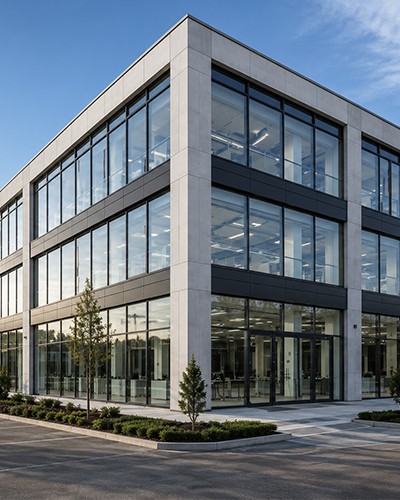
In modern architecture, as buildings rise higher and approach exposed wind corridors along coastal areas, the dynamic loads acting on the building envelope increase significantly. Airflow experienced as a light breeze at ground level can develop into severe wind loads generating thousands of Pascals ($Pa$) of pressure at elevations of 50 metres and above.
The selection of aluminium door, window, and façade systems for such demanding locations should therefore be based not only on aesthetic preferences, but also on watertightness, air permeability, and wind resistance parameters verified through accredited laboratory testing.
What Is Wind Load Resistance and Deflection Limit Analysis?
Wind resistance is tested in accordance with EN 12210 and certifies the system's ability to maintain structural integrity under extreme wind pressure. The classification includes two primary indicators: the letter code represents the amount of deflection, while the numerical code represents the test pressure resisted by the system.
- Deflection Classification ($A, B, C$): Class $C$ represents the lowest deflection ratio ($L/300$). By minimizing profile deformation under wind loads, it helps prevent glass breakage and gasket separation.
- Pressure Class ($1–5$): Class $5$ indicates that the system can withstand a nominal test pressure of $2000\text{ }Pa$ (approximately equivalent to a storm wind speed of $200\text{ }km/h$) and an extreme safety load of $3000\text{ }Pa$ without sustaining damage.
- Engineering Significance of the C5/B5 Classification: The C5/B5 performance achieved by Cosabella systems ensures reliable operation without permanent profile deformation, even in high-rise towers, penthouse terraces, and coastal buildings.
The Critical Importance of Class 9A Watertightness
Wind-driven rain creates a high-pressure film of water across the façade surface. The EN 12208 standard classifies the pressure level at which a window or door system remains watertight without allowing water to penetrate into the interior.
- Test Pressure Threshold: While standard systems may begin to allow water penetration at pressures between $150–300\text{ }Pa$, Class 9A certified systems prevent water ingress into the interior even under a pressure of $600\text{ }Pa$.
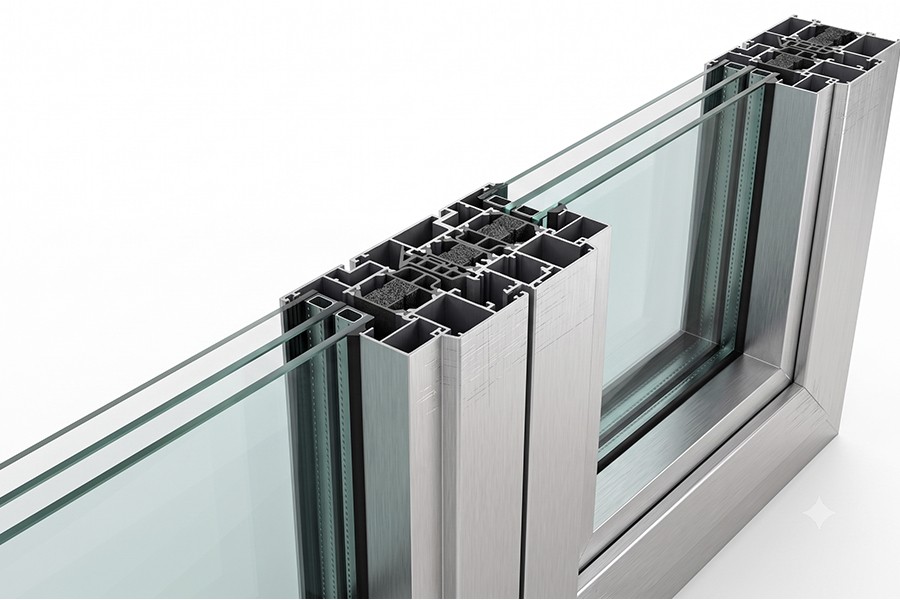
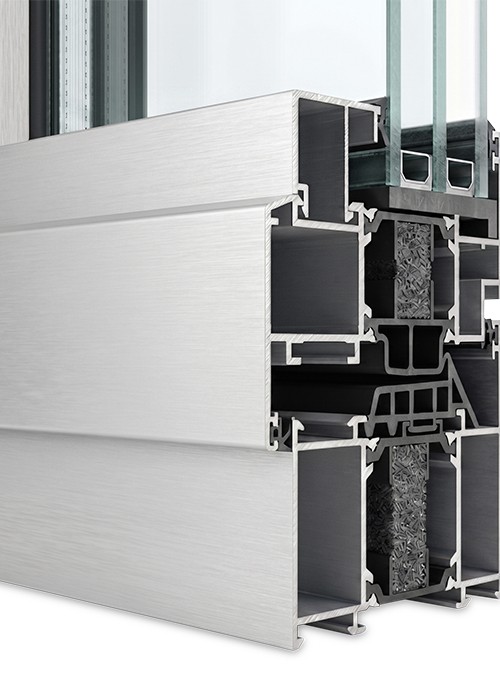
- EPDM Gasket Architecture and Multi-Point Locking: High watertightness performance is achieved through internal drainage chambers, continuously vulcanized EPDM central gasket design, and multi-point security locking mechanisms that apply uniform pressure between the sash and frame.
Moment of Inertia ($I_x, I_y$) and Profile Wall Thickness Optimization
In opening and sliding systems, the primary structural element resisting wind loads is the geometric moment of inertia of the vertical and horizontal profile sections.
- Correct Alloy and Reinforcement: Robust profile bodies manufactured from primary 6063 and 6082 T6 aluminium alloys, together with structural steel reinforcements positioned within the internal profile chambers, help prevent large glass modules from vibrating under wind loads.
- Prevention of Installation Errors: Structural calculations based on building height and wind-load maps prevent wind-induced whistling and sash sagging caused by the use of insufficient profile sections.
Risk-Free Construction Sites Through Verified Engineering
Through structural strength calculations conducted within its R&D department, advanced simulation software, and internationally accredited test reports (Class 9A, Class 4, C5/B5), Cosabella provides architects, engineers, and investors with a safe and sustainable building envelope, even in the most demanding climate zones.
🏢 Explore our solutions for high-rise buildings, tested according to international wind resistance and air permeability standards, in our Façade Systems category.
📐 For structural solutions tailored to your project's building height and regional wind load calculations, contact our Architectural Project Technical Support team.